Ordinary rate delivery envelopes: AB-EO-2.
- Australia 1901-1988
- New South Wales
- Overview of NSW
- Telegraph lines
- Telegraph Offices
- Date stamps
- Forms
- Envelopes
- Instructional annotation
- Collect
- Delayed
- Free
- Immediate Urgent
- Reply paid
- Rates
- Rates
- Summary of Telegram rates 1858-1900.
- NSW - Qld rates 1858 to 1870
- NSW - Vic rates 1858 to 1870
- Stamps
- 1871 Telegraph stamps
- 1885 proposal
- 1893 proposal
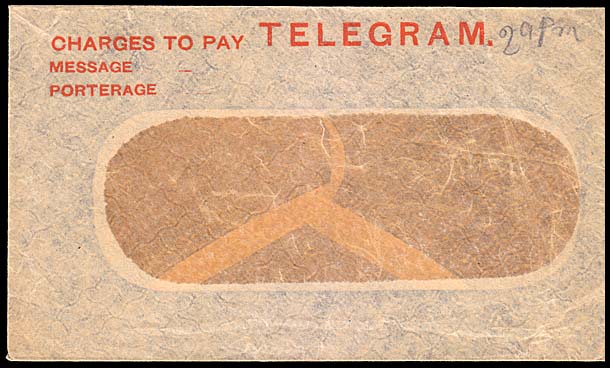
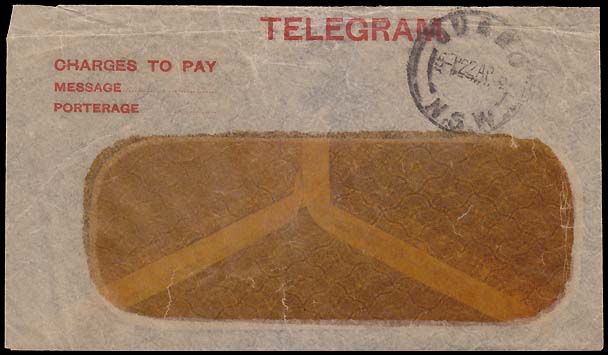
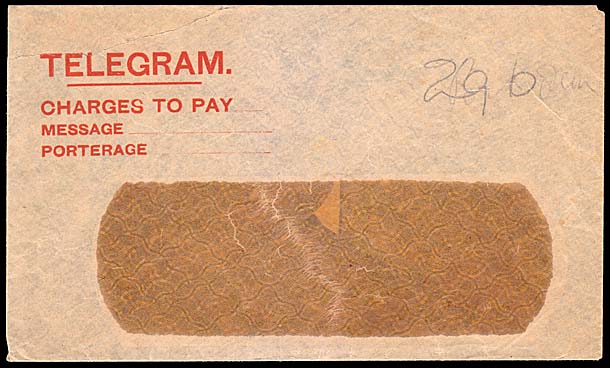
| Heading and notes: | No form number. TELEGRAM in red at top above window. |
| Message area: | Blank. |
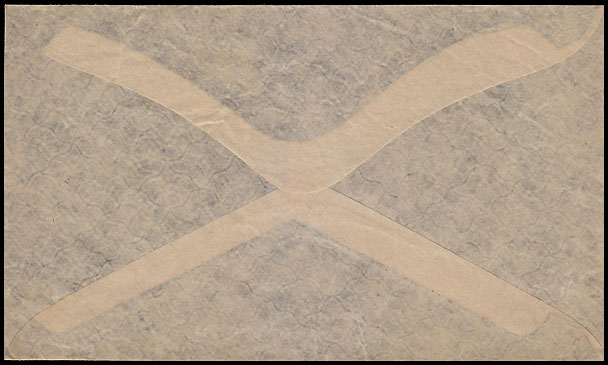
| Reverse side: | Blank. |
| Colours (text & envelope): | Red on cream to grey. |
| Size of envelope overall: | 81 × 136 mm. |
- window envelope;
- no border around window;
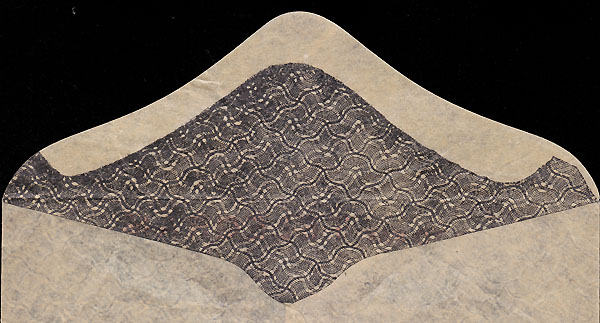
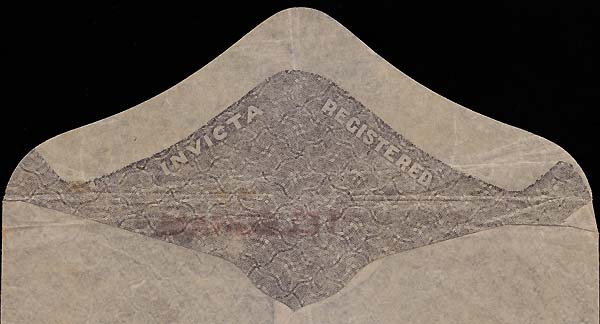
- black wavy line security pattern printed inside;
- curved peak with curved sides;
- the main distinctions between the varieties are:
2A: TELEGRAM to the right of CHARGES ...;
2B: TELEGRAM nearly centered with CHARGES ... one space below;
2C: TELEGRAM and CHARGES ... left justified.
- the address to be easily read through the window;
- a specified area for the date stamp
Australia accepted the UPU recommendations on 1 January 1922 and authorised the use of window envelopes as from 1924. Formats for delivery forms had to be altered to enable window envelopes to be used with the address positioned in an appropriate location (see AB-DO-3 and AB-DU-3).
The evolution of subsequent issues of window envelopes and their many variations can be evaluated in terms of present UPU and ISO standards:
Rectangular items shall be considered standardized if their length is not less than their width multiplied by √2 (approximate value 1.4). These items shall satisfy the following conditions:
- Minimum dimensions: 90 x 140 mm, with a tolerance of 2 mm.
- Maximum dimensions: 120 x 235 mm, with a tolerance of 2 mm.
The transparent panel for the address of the addressee shall in addition be at least:
- 40 mm from the top edge of the envelope (tolerance 2 mm);
- 15 mm from the right-hand edge;
- 15 mm from the left-hand edge;
- 15 mm from the bottom edge.
The panel may not be bordered by a coloured band or frame. Service indications may be placed just above the addressee's address.
Details of use and rarity.
| Form sub-number |
Schedule number | Earliest recorded date | Rarity rating |
| EO-2A | None. | NC | |
| EO-2B | None. | 22 April 1935 at Dubbo, NSW. | NC |
| EO-2C | None. | NC |