South Australia - Interim period: 1901-1917
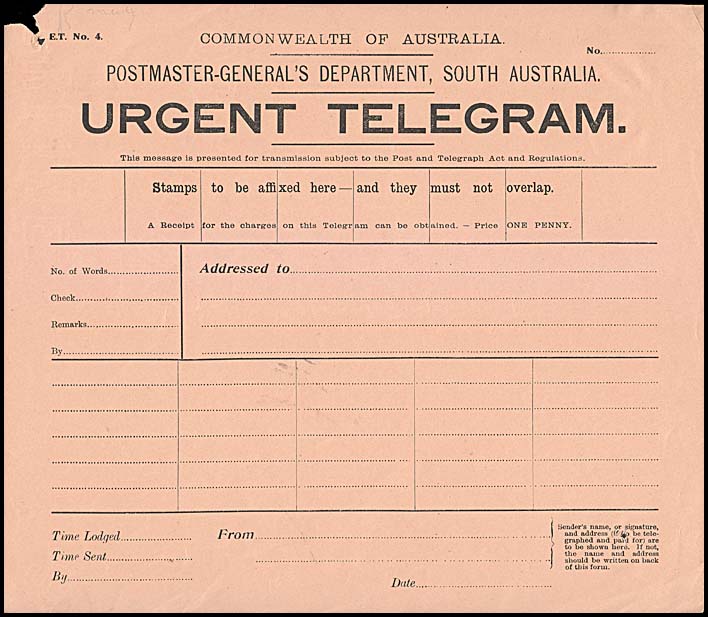
Urgent transmission form: SI-TU-1.
Queensland
South Australia
Tasmania
Victoria
Western Australia
International
Special aspects
Urgent transmission form: SI-TU-1.
- Australia 1901-1988
- New South Wales
- Overview of NSW
- Telegraph lines
- Telegraph Offices
- Date stamps
- Forms
- Envelopes
- Instructional annotation
- Collect
- Delayed
- Free
- Immediate Urgent
- Reply paid
- Rates
- Rates
- Summary of Telegram rates 1858-1900.
- NSW - Qld rates 1858 to 1870
- NSW - Vic rates 1858 to 1870
- Stamps
- 1871 Telegraph stamps
- 1885 proposal
- 1893 proposal
General characteristics:
| Heading and notes: | Form number E.T. No. 4 |
| Message area: | 6 lines of 5 boxes. |
| Reverse side: | Blank. |
| Colours (text & form): | Black on salmon. |
| Size of form overall: | 192 × 218 (or 220) mm. |
| Size of datestamp box: | No box but "Stamps..." row is 24 mm high. |
Distinctive characteristics of the form:
- boxes at end of STAMPS TO BE AFFIXED are both blank;
- no schedule number;
- the main distinctions between the two formats are:
1A: G of TELEGRAM has a vertical bar, No. in top right is large and lines in the "ADDRESSED to "entry are solid;
1B: G of TELEGRAM has no vertical bar, No. in top right is small and lines in the "ADDRESSED to" entry are dotted.

Details of use and rarity.
| Form sub-number |
Schedule number | Earliest recorded date | Rarity rating |
| TU-1A | None | RR | |
| TU-1B | None | RR |